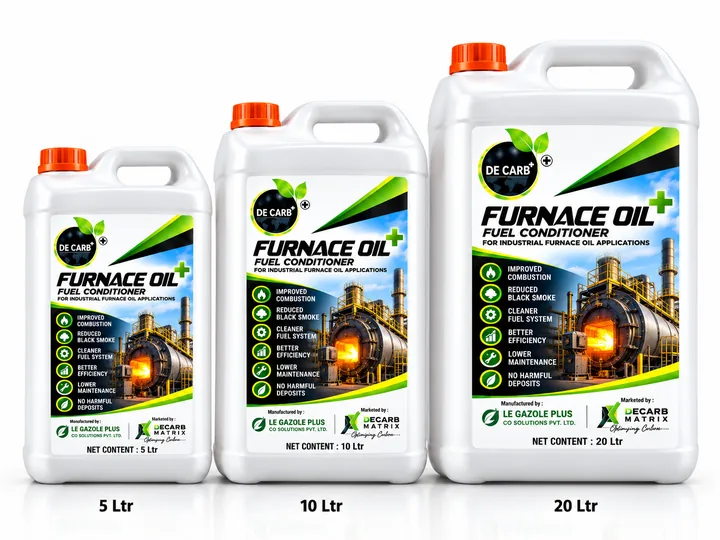
DeCarb fuel technology
The science of a cleaner burn
Fuel that doesn’t burn completely is money going out of the exhaust. DeCarb conditions fuel before combustion, so more of every litre becomes useful work.
The challenge
Fuel is your biggest cost. It’s also your biggest opportunity.
Rising fuel prices, tighter emissions norms, ESG reporting and E20 petrol are squeezing every operation. Most businesses accept fuel waste as a fixed cost. It isn’t.
High fuel consumption
Fuel is the biggest running cost most fleets, mines and plants can still control.
Rising fuel prices
The price is outside your control. How much you burn is the lever you have.
Incomplete combustion
Fuel that does not burn completely leaves through the exhaust as money you paid for.
Tighter emissions norms
Regulators, customers and lenders now ask for credible emissions data.
ESG and Scope 1 reporting
Group targets have to be delivered site by site, with the equipment you run today.
Deposits and downtime
Carbon build-up and unplanned stops cost more than the maintenance budget shows.
E20 petrol
Ethanol-blended petrol has changed what drivers and fleets put in the tank.
Capital constraints
New engines, burners and fuel switches all compete for limited capital.
How DeCarb works
Five ways DeCarb makes every litre count
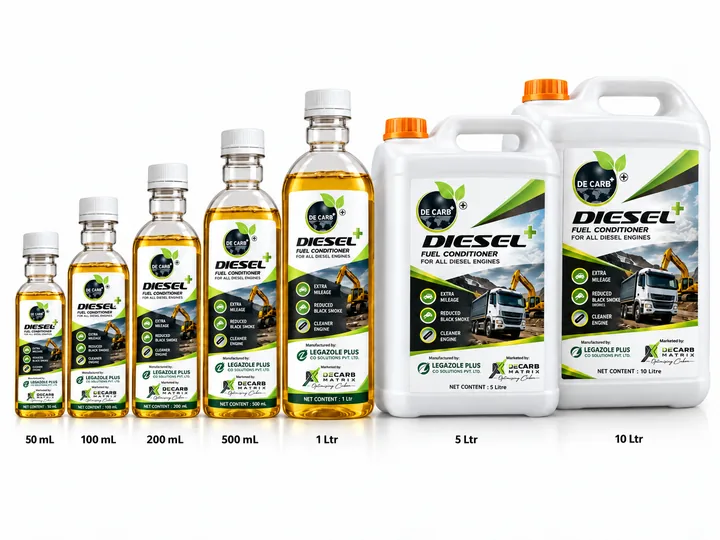
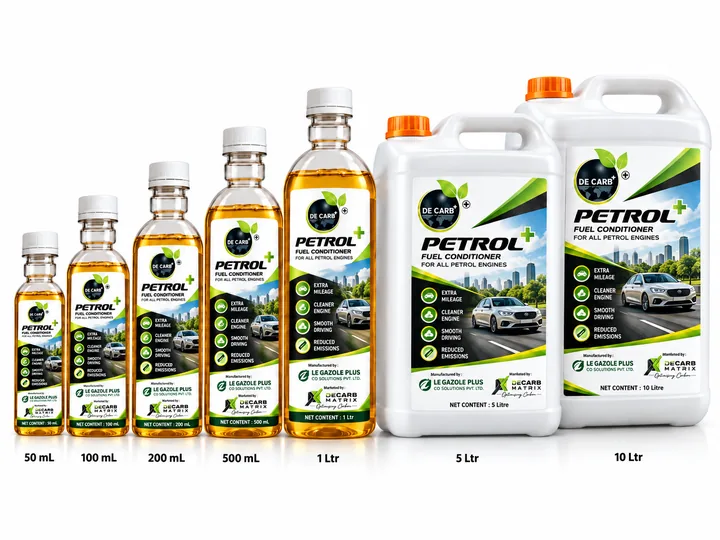
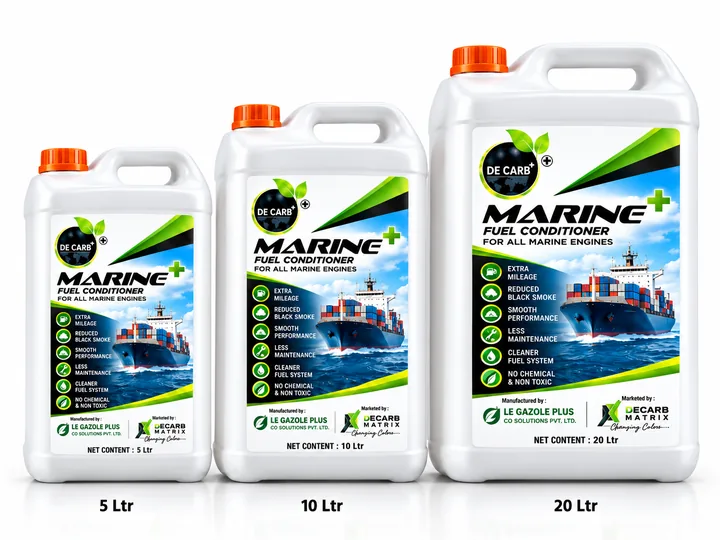
One technology, formulated for diesel, petrol, marine fuel and furnace oil. It goes into the fuel you already buy: no new engines, no new burners.
-
01
Fuel conditioning
DeCarb conditions the fuel before it reaches the engine or burner, so it arrives ready to burn.
Illustrative diagram -
02
Finer atomisation
Better-conditioned fuel breaks into a finer spray, giving the air more surface to reach.
Illustrative diagram -
03
Combustion support
A more complete burn turns more of every litre into useful work instead of exhaust.
Illustrative diagram -
04
Less residue and deposits
A cleaner burn leaves less carbon behind in injectors, burners and the combustion path.
Illustrative diagram -
05
Better energy use
More output from the same fuel: more kilometres, tonnes, kilowatt-hours or heat per litre.
Illustrative diagram
How much each effect contributes depends on your fuel, equipment and duty cycle. That is why we measure the result on your machines. See the evidence
Integrated delivery model
From first meeting to fleet-wide savings
Our five-phase delivery model takes you from baseline to boardroom-ready results. Every phase ends in a document you keep, and every decision to scale follows a measured result.
- 01Engage
Agree the goal, the scope and the team on your side.
- 02Assess
Review your equipment, duty cycles and fuel records.
- 03Baseline
Fix the starting point from your own logs, in your units.
- 04Diagnose
Find where fuel is lost: load, idling, combustion, maintenance.
- 05Identify opportunity
Size the saving worth trialling, in litres and rupees.
You getBaseline report
- 06Evaluate technology
Check fuel grade, equipment category and operating conditions.
- 07Select product
Match the DeCarb formulation and dose to the fuel you burn.
- 08Design pilot
Choose representative assets and agree the method and success criteria before you start.
You getPilot protocol
- 09Implement
Dose the fuel and run the equipment exactly as normal.
- 10Measure
Log fuel and output the same way as the baseline.
You getPerformance record
- 11Verify
Compare the trial with the baseline, signed off by your team.
- 12Optimise
Fine-tune the dose and the application for your duty cycle.
- 13Report
Results in your units, ready for management and ESG reporting.
You getVerification report and optimisation plan
- 14Commercial deployment
Agree supply for the wider fleet or plant, on the evidence.
- 15Scale
Roll out with ongoing monitoring, so every saving stays visible.
You getCommercial scale decision
How we measure
Measured on your machines. Not in a brochure.
We log litres, hours, tonnes, kilometres and kWh before and during the trial, so the result is yours, in your units, signed by your team.
Analyse your own trial resultsBaseline
We read your own fuel and output records and agree the starting point with your team, before anything changes.
Controlled trial
The same equipment runs on DeCarb under normal duty, logged exactly the same way, against the method agreed up front.
Verification
You get a signed before-and-after comparison in your units: km/L, L/hour, L/tonne, L/kWh or fuel per batch.
What we log
- Litres of fuel, from your own fuel logs
- Engine or run hours
- Tonnes moved or produced
- Kilometres travelled
- Kilowatt-hours generated
- Heat output, batches or units made
How do you prove the savings?
We set a baseline from your own records, run a controlled trial on the same equipment, and compare results in your units, such as km/L, L/hour, L/tonne or L/kWh.
Is the assessment really free?
Yes. Our engineers review your operation and show you the savings opportunity before you commit to anything.
How long does a trial take?
Long enough to cover your normal duty cycle. A furnace on a steady load can show a result within a week, as at a copper products plant. Road fleets usually need several weeks of routes.
Free fuel assessment
Ready to see it on your equipment?
Tell us what you run and what you burn. An engineer will reply within one business day with a plan for your free assessment and a controlled trial.