
FAQ
Straight answers about DeCarb
How much you can save, how we prove it, how to use it and how to buy it. Can’t find your question? An engineer will answer it within one business day.
No questions match. Ask an engineer instead.
General
What is DeCarb?
A fuel-conditioning technology added to diesel, petrol, marine fuel or furnace oil to help equipment get more useful work from every litre. It comes in four formulations, one for each fuel.
Who is behind Decarb Matrix?
Decarb Matrix is the commercial brand of Le Gazole Plus Eco Solutions Pvt. Ltd., based in Hyderabad. The technology behind DeCarb won Best Innovation, Small Industry, at the Telangana State Industry Awards 2018.
Where do you work?
We are based in Hyderabad and work across India. We are appointing distributors in the UAE, the Maldives and Fiji.
Are avoided emissions carbon credits?
No. Fuel you don’t burn reduces your reported Scope 1 emissions, but avoided emissions are not carbon credits. No credit eligibility, issuance or carbon revenue is implied.
Products
How much fuel will I save?
Recorded results range from 7.4% to 18.18%, depending on the operation. Your result depends on your equipment and duty cycle, which is why we start with a free assessment and a measured trial. See the evidence.
Do I need to modify my engines or burners?
No. DeCarb is added to the fuel you already use. Your engines, burners and maintenance schedule stay as they are.
Which product do I need?
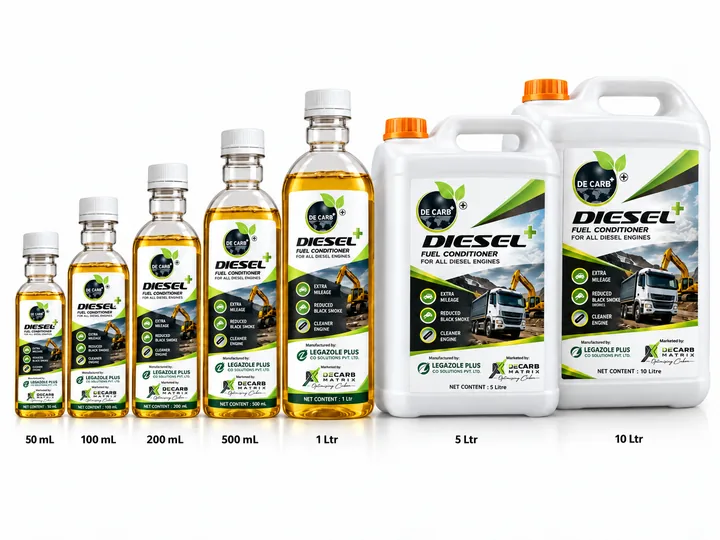
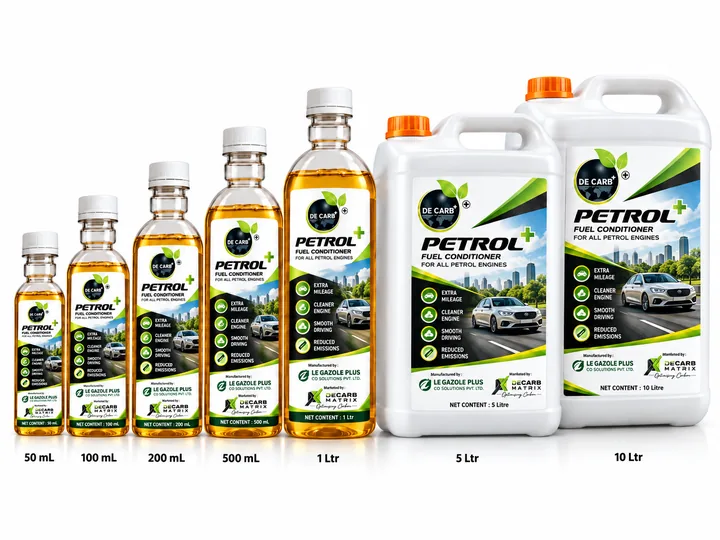
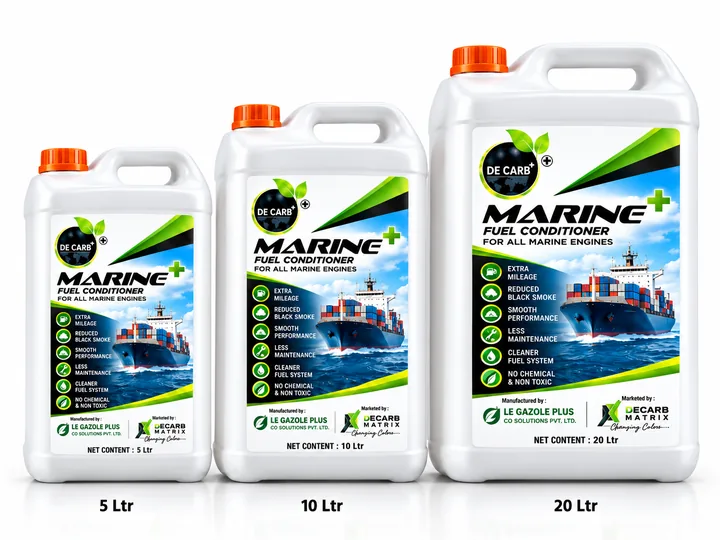
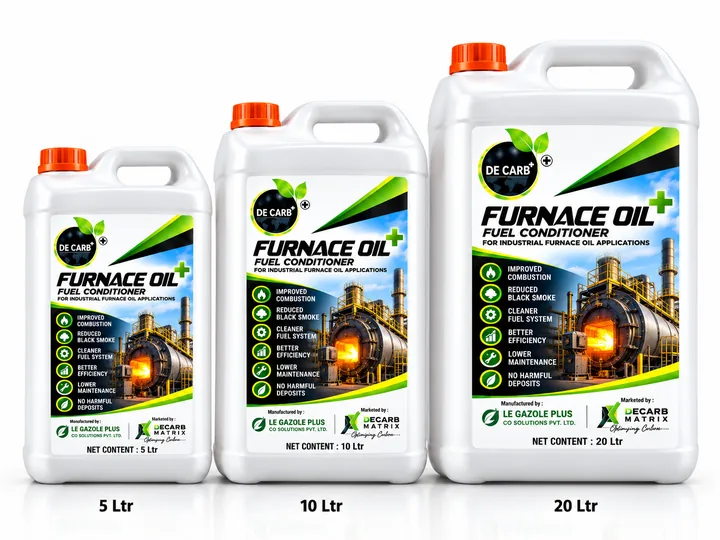
Choose by the fuel you burn: Diesel Plus for diesel, Petrol Plus for petrol, Marine Plus for marine diesel and gas oil, Furnace Oil Plus for furnace oil. Use the product finder.
Usage & safety
How is DeCarb added?
Into the fuel tank or bulk storage just before refuelling, so the fuel mixes it as it flows in. For fleets and plants, your engineer sets the dosing point and the dose at the assessment.
How much do I use?
The dose depends on your fuel and equipment. Vehicle packs show the dose on the label. For fleets and plants, your engineer confirms it at the free assessment and plans the order quantity with you.
How should I store it?
Keep packs tightly closed and upright, out of direct sunlight and away from heat and ignition sources. Read the safety data sheet before handling. Request the SDS.
Trials & measurement
How do you prove the savings?
We set a baseline from your own records, run a controlled trial on the same equipment, and compare results in your units, such as km/L, L/hour, L/tonne or L/kWh.
Is the assessment really free?
Yes. Our engineers review your operation and show you the savings opportunity before you commit to anything.
How long does a trial take?
Long enough to cover your normal duty cycle. A furnace on a steady load can show a result within a week, as at a copper products plant. Road fleets usually need several weeks of routes.
What do I get at the end of a trial?
A signed before-and-after comparison in your own units, ready for management and ESG reporting. Then you decide whether to scale.
Buying & distributors
How do I order?
Request a quote on our contact page or WhatsApp us. We confirm the product, pack size and quantity for your fuel volume.
Which pack sizes are available?
Diesel Plus and Petrol Plus come in 50 mL to 1 L bottles and 5 L and 10 L cans. Marine Plus and Furnace Oil Plus come in 5 L, 10 L and 20 L cans.
Can I become a distributor?
Yes. We are appointing partners in India, the UAE, the Maldives and Fiji. Apply here.
Vehicle owners
Will DeCarb improve my mileage?
That is what it is designed to do. The best proof is your own: note your km/L for two tanks without and two tanks with DeCarb. State transport buses recorded 7.4% more km/L over 42,412 km.
Can I use Petrol Plus with E20 petrol?
Yes. Petrol Plus is formulated for the petrol sold in India today, including E20 blends. Read our E20 guide.
How do I use it in my car or bike?
Add the dose shown on the pack to your tank just before you fill up, so the fuel mixes it in. Then drive as normal.
Where can I buy it?
Order on WhatsApp, or search for a stockist near you on our where to buy page.
Glossary
The terms we use, in one sentence each
Fuel, measurement and emissions terms you will meet in our reports, case studies and calculators.
- Atomisation
- The break-up of fuel into fine droplets as it is sprayed into an engine or burner, so it can mix with air and burn.
- Baseline
- The measured starting point of fuel use and output, recorded before any change, against which a trial is compared.
- BSFC
- Brake specific fuel consumption: the fuel an engine uses for each unit of power it delivers, usually in grams per kilowatt-hour.
- CII
- Carbon Intensity Indicator: the IMO rating of a ship's CO₂ emissions per unit of cargo carried and distance sailed.
- CO₂e
- Carbon dioxide equivalent: other greenhouse gases converted to the amount of CO₂ with the same warming effect.
- Controlled trial
- A trial on selected representative assets, run with a measurement method, responsibilities and success criteria agreed before it begins.
- DG set
- Diesel generator set: a diesel engine coupled to an alternator, used for prime or standby power.
- Duty cycle
- The pattern of load, speed and running time that a machine works through in normal operation.
- E20
- Petrol blended with 20% ethanol, now the standard petrol at most fuel stations in India.
- Emission factor
- The mass of CO₂ (or CO₂e) released per litre or kilogram of a fuel burned, used to turn fuel use into emissions.
- Furnace oil
- A heavy residual fuel oil burned in industrial furnaces, boilers and heaters.
- HSD
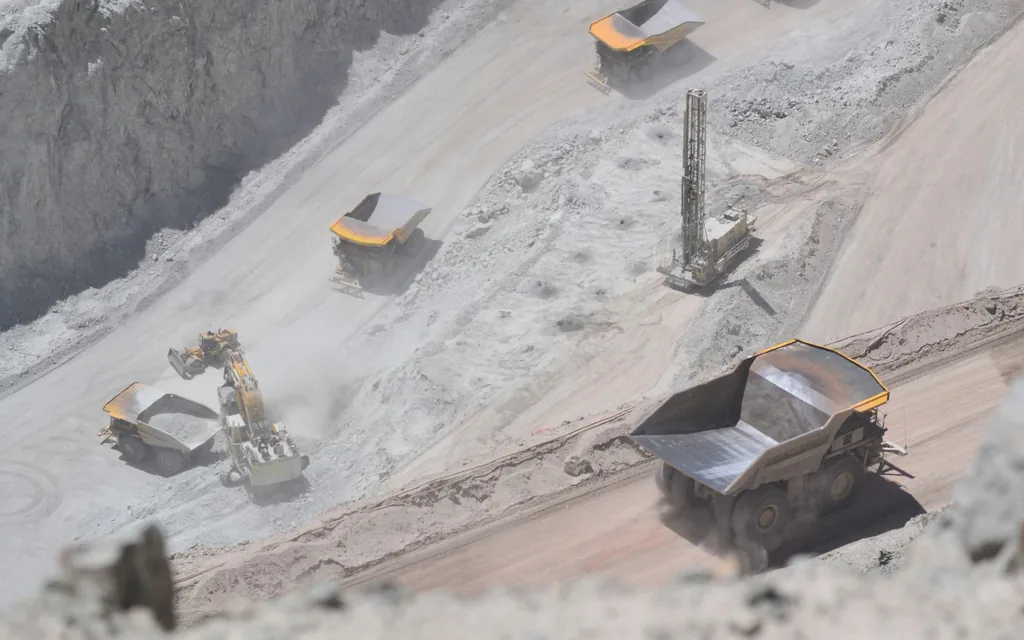
- High-speed diesel: the diesel fuel used in road vehicles, mining equipment and generator sets in India.
- km/L
- Kilometres per litre: the distance a vehicle travels for each litre of fuel it uses.
- L/100 km
- Litres per 100 kilometres: the fuel a vehicle uses to travel 100 kilometres.
- L/hour
- Litres per hour: the fuel a machine, engine or furnace uses for each hour it operates.
- L/kWh
- Litres per kilowatt-hour: the fuel a generator set uses for each unit of electricity it produces.
- L/tonne
- Litres per tonne: the fuel used to move or produce one tonne of material.
- LDO
- Light diesel oil: a distillate fuel used in some industrial burners, boilers and slow-speed engines.
- MGO
- Marine gas oil: a distillate marine fuel used in ships' main and auxiliary engines.
- NABL
- National Accreditation Board for Testing and Calibration Laboratories, which accredits laboratories in India for specific test scopes.
- Scope 1 emissions
- Direct greenhouse gas emissions from sources a company owns or controls, such as fuel burned in its own vehicles and boilers.
- SFOC
- Specific fuel oil consumption: a marine engine's fuel use per unit of power delivered, usually in grams per kilowatt-hour.
- Verified business case
- A calculation built from a customer's own verified baseline and trial result, used to decide whether to scale.
Still have a question?
Ask an engineer. Get a straight answer.
Tell us what you run and what you burn. We reply within one business day, by phone, email or WhatsApp.