India’s petrol is now E20. Here is what changes, what the Ministry of Petroleum and Natural Gas says about mileage and older vehicles, and how to measure your own km/L.
What is E20?
E20 is petrol blended with ethanol, an alcohol made mainly from sugarcane and grains: 20 parts ethanol to 80 parts petrol. India moved to E20 ahead of its original target, and it is now the standard petrol at most fuel stations.
Will it change my mileage?
Ethanol carries a little less energy per litre than petrol, so a small change in mileage is possible. According to the Ministry of Petroleum and Natural Gas (statement of 4 August 2025), any drop is small for vehicles designed for E10 and calibrated for E20, and somewhat larger for other, mostly older, vehicles.
The Ministry also points out that mileage depends on many other things:
- driving habits
- regular servicing and a clean air filter
- tyre pressure and wheel alignment
- air-conditioning use
What about older vehicles?
The Ministry has said that concerns about engine damage from E20 lack technical foundation. If your vehicle is older, your manufacturer’s service centre is the right place to ask about your specific model.
Whatever changes, the fuel, your driving or what you add to the tank, the only reliable answer is your own numbers.
Measure, don’t guess
- Fill the tank to full and note the odometer reading.
- Drive as you normally do.
- At the next fill-up, fill to full again and note the litres and the odometer reading.
- Repeat for at least three fill-ups to get a fair average.
Our free Mileage Tracker does the arithmetic for you, and your entries stay in your own browser.
Where DeCarb fits
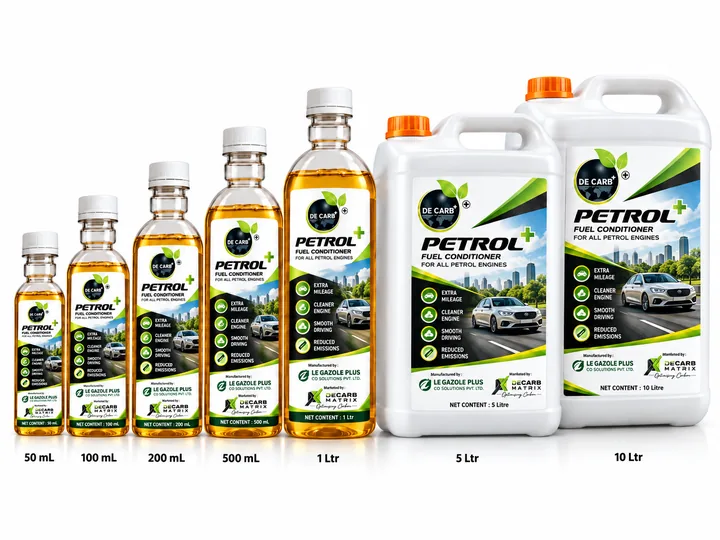
DeCarb Petrol Plus is formulated for the petrol sold in India today, including E20 blends. Like every DeCarb product, judge it on measured results from your own vehicle: log two tanks without it and two tanks with it, and compare.
Source: Ministry of Petroleum and Natural Gas, statement of 4 August 2025, as reported in the national press.